
Introduction
Behind every elegant glass bottle lies a multi-billion-dollar industry fueled by psychology, artistry, and extraordinary profit margins. Taking a look inside the Perfume Business reveals how master creators blend rare ingredients with brilliant marketing to turn simple aroma notes into iconic, beloved empires. Whether you are an aspiring beauty entrepreneur or an avid fragrance lover, here is what it truly takes to craft a scent that captivates the world and achieves lasting commercial success.
Today, people buy perfumes for many reasons. Some want a signature scent for everyday use. Others look for luxury fragrances for special occasions. Many customers also enjoy collecting different perfumes for different moods and seasons. At the same time, social media, online shopping, and influencer marketing have made it easier for perfume brands to reach new customers. As a result, the global perfume market is expected to keep growing over the next several years.
But have you ever wondered what happens before a perfume reaches a store shelf?
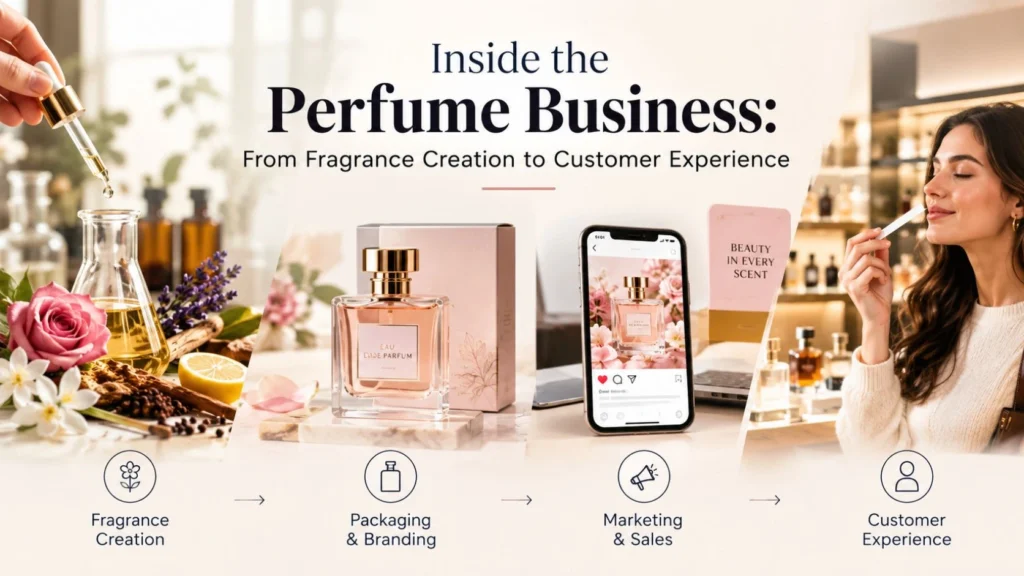
A single bottle of perfume goes through many steps. Experts create the fragrance. Manufacturers produce it. Designers create the bottle and packaging. Marketing teams build the brand. Retailers and online stores then make the product available to customers.
In this guide, you will learn how the perfume business works from start to finish. We will explore different types of perfume businesses, how perfumes are made, how brands attract customers, and the latest trends shaping the industry. Whether you are curious about fragrances or want to understand this growing market, this guide will give you a complete picture.
1. Is the Perfume Business Worth It?
The perfume business is one of the most exciting industries in the beauty market. Every year, millions of people buy fragrances for themselves or as gifts. This steady demand creates opportunities for both well-known brands and new companies.
One reason for this growth is that perfume is no longer seen as only a luxury product. Many people now wear perfume every day. They use different fragrances for work, parties, travel, or even relaxing at home. Younger customers also see perfume as a way to express their style and personality.
The industry also offers many ways to serve customers. Some brands focus on affordable everyday perfumes. Others sell luxury fragrances made with rare ingredients. Some create natural or vegan perfumes, while others design unisex scents that anyone can wear.
However, the perfume business is also highly competitive. Hundreds of new brands enter the market every year. To succeed, a brand needs more than just a good fragrance. It also needs strong branding, attractive packaging, smart marketing, and a great customer experience.
Despite these challenges, the perfume industry’s future looks promising. Rising incomes, growing interest in personal grooming, and the popularity of online shopping continue to increase demand for fragrances around the world. Brands that understand their customers and offer high-quality products have a good chance of building long-term success.
2. Different Types of Perfume Businesses
The perfume industry is not limited to one type of business. Brands enter this market in different ways depending on their budget, target customers, and business goals. Some companies create their own fragrances, while others focus on branding and selling perfumes made by manufacturers.
Understanding different perfume business models helps us understand how this industry works.
Luxury Perfume Brands
Luxury perfume brands focus on exclusivity, premium quality, and strong brand value. These brands usually use high-quality ingredients and invest heavily in packaging, storytelling, and customer experience.
For luxury brands, perfume is not just a product. It represents a lifestyle. Customers often buy these fragrances because they connect with the brand image, heritage, and emotions behind the scent.
Brands in this category usually target customers who are willing to pay more for unique fragrances and premium experiences.
Affordable and Mass-Market Perfume Brands
Mass-market perfume brands focus on making fragrances available to a larger audience. These perfumes usually have lower prices and target everyday users.
These brands compete by offering good quality at affordable prices. They often create different fragrance options for men, women, and younger customers.
This segment has grown because more people now consider perfume a daily grooming product instead of something used only on special occasions.
Niche Perfume Brands
Niche perfume brands focus on creating unique and artistic fragrances. Instead of making perfumes for everyone, they target a specific group of fragrance lovers.
These brands often experiment with unusual ingredients, creative combinations, and limited-edition collections.
Customers who buy niche perfumes usually look for something different from common fragrances available in the market.
Natural and Sustainable Perfume Brands
Many modern customers are becoming more interested in natural and environmentally friendly products. This has created opportunities for brands that use natural ingredients, eco-friendly packaging, and sustainable production methods.
These brands focus on customers who care about clean beauty and responsible consumption.
Online-First Perfume Brands
The growth of e-commerce has changed how perfume brands reach customers. Many new brands now start online instead of opening physical stores.
Online-first brands use websites, social media, and digital marketing to build awareness and sell directly to customers. This approach helps brands reduce costs and reach customers across different locations.
Overall, each perfume business model has its own opportunities and challenges. A successful brand understands its customers and creates a clear identity that makes it different from competitors.
3. How Perfumes Are Created: The Journey Behind Every Bottle
A perfume bottle may look simple, but creating a fragrance requires creativity, science, and careful planning. Behind every perfume is a long process that combines different ingredients to create a memorable scent.
Understanding Fragrance Notes
Every perfume has different layers of smell, known as fragrance notes. These notes work together to create the final scent experience.
There are three main types of fragrance notes:
Top Notes:
These are the first scents people notice after applying perfume. They create the first impression but usually disappear quickly. Examples include citrus and fresh fruity smells.
Middle Notes:
Also called heart notes, these appear after the top notes fade. They form the main character of the perfume. Floral and spicy scents are common middle notes.
Base Notes:
These are the longest-lasting scents. They provide depth and help the fragrance stay on the skin for a longer time. Common base notes include vanilla, musk, and woody aromas.
A perfumer carefully balances these notes to create a smooth and attractive fragrance.
Selecting Ingredients
Perfume creators use different types of ingredients to develop fragrances. These can include flowers, fruits, spices, woods, oils, and synthetic aroma molecules.
The choice of ingredients depends on the type of perfume a brand wants to create. A fresh summer fragrance may use light citrus ingredients, while a luxury evening perfume may include rich woody or oriental notes.
Testing and Improving the Fragrance
Creating a perfume is a process of testing and improvement. Perfumers create different versions and evaluate how each one smells over time.
They test factors like:
- How long the fragrance lasts
- How the scent changes after application
- How customers react to the fragrance
This process helps brands create a final product that customers enjoy.
Packaging and Presentation
In the perfume industry, packaging plays an important role. The bottle design, box, and overall presentation influence how customers see a product.
A beautiful bottle can create excitement before customers even experience the fragrance. Many brands use unique designs and premium packaging to communicate their brand identity.
The journey from an idea to a finished perfume bottle requires teamwork between perfumers, designers, manufacturers, and marketers. This combination of creativity and business strategy is what makes the perfume industry unique.
4. The Importance of Branding in the Perfume Business
In the perfume industry, customers do not only buy a fragrance. They also buy the story, emotions, and experience connected with the brand. This is why branding plays a very important role in the success of a perfume business.
Many perfumes may have similar scents, but strong branding helps a product stand out in the market. A successful perfume brand creates a unique identity that customers can remember and connect with.
Creating a Strong Brand Identity
A perfume brand’s identity includes many elements such as the brand name, logo, packaging, colors, and overall style. These elements help customers recognize the brand easily.
For example, a luxury perfume brand may use elegant designs, premium bottles, and a sophisticated message to create a feeling of exclusivity. On the other hand, a young and modern perfume brand may use colorful packaging and a fresh style to attract younger customers.
Every detail should communicate what the brand represents.
The Power of Storytelling
Storytelling is one of the strongest tools used by successful perfume brands. Instead of only talking about the ingredients, brands create stories around their fragrances.
A perfume can represent confidence, romance, adventure, freshness, or luxury. These emotions help customers create a personal connection with the product.
For example, a brand may describe a fragrance as inspired by a peaceful morning garden or a memorable travel experience. This makes the perfume feel more special and meaningful.
Packaging Creates the First Impression
The perfume bottle is often the first thing customers notice. A beautiful and unique design can attract attention and influence buying decisions.
Brands carefully choose bottle shapes, colors, and materials to match their target audience. Luxury brands often use premium packaging, while affordable brands focus on attractive designs at a lower cost.
Good packaging also makes perfumes popular as gifts because customers want products that look impressive.
Building Customer Trust
Trust is important in the perfume business. Customers want to know that they are buying a quality product.
Brands build trust through:
- Consistent product quality
- Honest product descriptions
- Customer reviews
- Professional websites
- Good customer service
A trusted brand can create loyal customers who continue buying new fragrances and recommending them to others.
In today’s competitive market, branding is not just about having a beautiful logo. It is about creating a complete experience that customers remember.
5. Marketing Strategies Used by Successful Perfume Brands
A great fragrance alone cannot guarantee success. Perfume brands need effective marketing strategies to reach customers and build awareness.
The way brands promote their products has changed significantly. Today, digital platforms play a major role in helping perfume companies connect with their audience.
Social Media Marketing
Social media has become one of the most powerful tools for perfume brands. Platforms like Instagram, Facebook, and TikTok allow brands to showcase their products visually.
Brands create content such as:
- Product videos
- Behind-the-scenes fragrance creation
- Customer reviews
- Lifestyle content
- New product launches
Since perfume is connected with emotions and lifestyle, visual content helps customers imagine how a fragrance fits into their life.
Influencer Marketing
Many perfume brands collaborate with influencers and content creators to promote their products. Influencers help brands reach new audiences and build trust.
When customers see someone they follow using or reviewing a perfume, they are more likely to become interested in the product.
Creating Attractive Online Stores
As more customers shop online, having a strong digital presence has become essential. A perfume website should provide:
- Clear product descriptions
- High-quality images
- Customer reviews
- Easy ordering process
- Information about fragrance notes
Since customers cannot smell a perfume online, brands need to describe the fragrance experience clearly.
Paid Advertising
Many perfume companies use online advertising to reach potential customers. Platforms like Google Ads and social media ads help brands target people based on their interests, age, location, and shopping behavior.
For example, a luxury perfume brand can target customers interested in premium fashion and beauty products.
Customer Reviews and Word of Mouth
Customer recommendations are extremely valuable in the perfume industry. Positive reviews help new customers feel confident about their purchase.
Many successful brands encourage customers to share their experiences through reviews, social media posts, and referrals.
Marketing helps transform a simple perfume into a recognizable brand. Companies that combine creative storytelling with smart digital strategies can build strong relationships with customers and grow in a competitive market.
Understanding Customer Preferences
Every customer has different fragrance preferences. Some people like fresh and light scents, while others prefer strong and long-lasting fragrances.
Perfume brands study customer behavior to understand what people want. They consider factors such as age, lifestyle, culture, and personal taste.
For example:
- Young customers may prefer trendy and affordable fragrances.
- Working professionals may look for elegant scents for daily use.
- Luxury customers may prefer rare and exclusive perfumes.
Personalization in Perfume Shopping
Personalization has become an important trend in the perfume industry. Customers enjoy products that feel unique and specially designed for them.
Some brands offer fragrance recommendations based on personality, mood, or lifestyle. Others provide customized perfume options where customers can create their own signature scent.
The Role of Customer Service
Good customer service can make a big difference in the perfume business. Customers often need help choosing the right fragrance because they cannot always understand a scent through an online description.
Brands can improve customer experience by offering:
- Helpful product recommendations
- Easy return policies
- Fast delivery
- Quick responses to customer questions
- Sample options before purchase
A positive buying experience encourages customers to return and recommend the brand to others.
Creating Brand Loyalty
A customer who loves a perfume often becomes a loyal customer of the brand. Loyalty is valuable because repeat customers help businesses grow over time.
Brands build loyalty by:
- Launching new collections
- Offering exclusive deals
- Creating membership programs
- Staying connected through emails and social media
When customers feel connected to a brand, they are more likely to continue buying from it.
In the perfume industry, the goal is not only to sell a bottle. The goal is to create a memorable experience that customers associate with positive emotions.
7. Future Trends and Opportunities in the Perfume Industry
The perfume industry is constantly changing. New customer preferences, technology, and lifestyle changes are shaping the future of fragrances.
Brands that understand these trends can find new opportunities and stay competitive in the market.
Growing Demand for Personalized Fragrances
Customers are increasingly looking for products that match their individual style. This has increased interest in customized and personalized perfumes.
In the future, more brands may use technology to recommend fragrances based on customer preferences, personality, and previous purchases.
Rise of Sustainable and Natural Perfumes
Many consumers are becoming more aware of environmental issues. They prefer brands that use natural ingredients, recyclable packaging, and sustainable production methods.
This has encouraged perfume companies to create eco-friendly products that reduce environmental impact.
Growth of Online Perfume Shopping
Online shopping has changed the way customers discover and purchase perfumes. Many people now explore fragrances through websites, social media, and online reviews.
To overcome the challenge of customers not being able to smell perfumes online, brands are using detailed descriptions, customer reviews, and sample kits.
The online perfume market is expected to continue growing as more customers become comfortable buying fragrances digitally.
Conclusion
The perfume business is a perfect combination of creativity, science, and customer experience. From developing unique fragrances to building a strong brand and creating meaningful connections with customers, every step plays an important role in success. As consumer preferences continue to change, opportunities in this industry are also growing. Brands that focus on quality, innovation, and understanding their customers can create a strong position in the market. The future of the perfume business looks promising, with new trends and technologies shaping the way people discover and enjoy fragrances.
People Also Read:
Home New
